Yemen has been experiencing a harsh conflict for years, leading to a continuous deterioration in humanitarian conditions. People suffer from severe shortages of food and water, declining livelihoods, rising prices, and a worsening economy. The districts of Al-Mawaset and Al-Selw in Taiz are among the most vulnerable, facing groundwater depletion, land degradation, and weak agricultural investment, which has further intensified the suffering of the most vulnerable families—especially female-headed households and displaced people struggling to improve their income opportunities.
Altaaf Abdullah Mohammed, a 19-year-old housewife, lives in Bani Yousuf area in Al-Mawaset district. Altaaf supports a family of seven siblings—four males and three females—while her father suffers from chronic illnesses, including diabetes and heart disease.
Altaaf describes her situation before the intervention, explaining that she had to travel nearly an hour to buy vegetables from the market. Many of the vegetables she purchased were heavily treated with chemical fertilizers and pesticides. Additionally, when they tried to grow crops near their home, they consumed large amounts of water due to a lack of knowledge about drip irrigation. Buying vegetables from markets or small shops also consumed a significant portion of their monthly income.
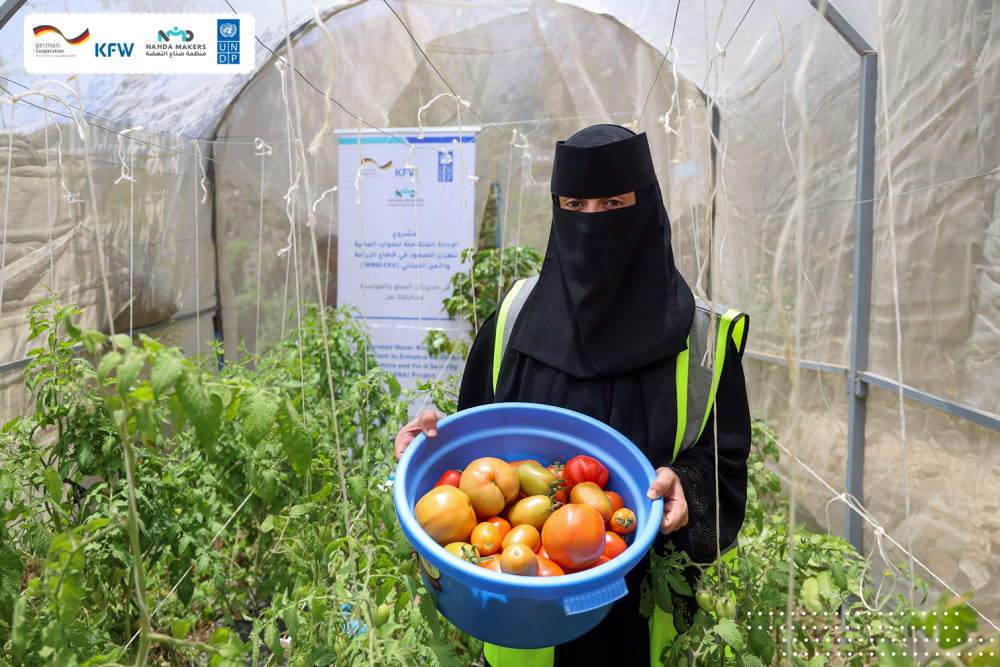
In December 2025, Nahda Makers Organization (#NMO), with support from the United Nations Development Programme (#UNDP), intervened by implementing small- agricultural initiatives project for the most vulnerable families in the Al-Selw and Al-Mawasit districts. The intervention provided beneficiaries with a complete home garden kit, including: A metal greenhouse structure netting, high-quality tomato seeds, agricultural tools, a water tank and drip irrigation pipes. In addition to the physical supplies, all beneficiaries received comprehensive training on agricultural value addition and modern farming techniques. To ensure the highest quality of implementation, NMO’s agricultural engineers provided continuous technical support throughout the setup and cultivation phases. Following a beneficiary list submitted by local WUAs in the target areas, the #NMO team conducted a field visit to Altaaf's home to verify her eligibility against the selection criteria. She was successfully selected and provided with her own home garden
Altaaf says: “I received a fully equipped home garden that protects crops from harsh weather conditions and shields them from animals and harmful insects. The drip irrigation system also helped us save water, and we learned modern irrigation and farming techniques” Speaking about the most important benefit, she adds: “It helped us return to farming as our ancestors did—relying on it, becoming self-sufficient, and selling the surplus.” Regarding her future plans, Altaaf explains: “I am also thinking of growing zucchini, chili peppers, and cucumbers, as the greenhouse is very suitable for these crops and helps preserve them.”
In conclusion, Altaaf expressed her sincere gratitude to Nahda Makers Organization and #UNDP for such projects that have revived the spirit of agriculture in the area. She also hopes that more families will receive similar home gardens so the benefits can expand and spread further.
It is worth noting that this activity is part of the " Integrated Water Resources Management to Enhance Resilience of Agriculture (ERA) and Food Security" project, funded by the (#BMZ) through (#KfW), implemented by the (#UNDP) in collaboration with #Nahda_Makers (#NMO).
.jpg)
.jpg)