Hadramout Governorate in southeastern Yemen is facing escalating humanitarian and economic challenges as a result of the ongoing conflict and deteriorating economic conditions, including the continuous decline in the value of the local currency and worsening environmental conditions. The districts of Al Qatn and Sayun are particularly affected by these circumstances, which have directly impacted people’s lives and livelihoods. Amid the country’s ongoing economic crisis, the lack of stable employment opportunities remains one of the most critical challenges facing low-income families, as securing basic needs has become a daily struggle and burden for many households.
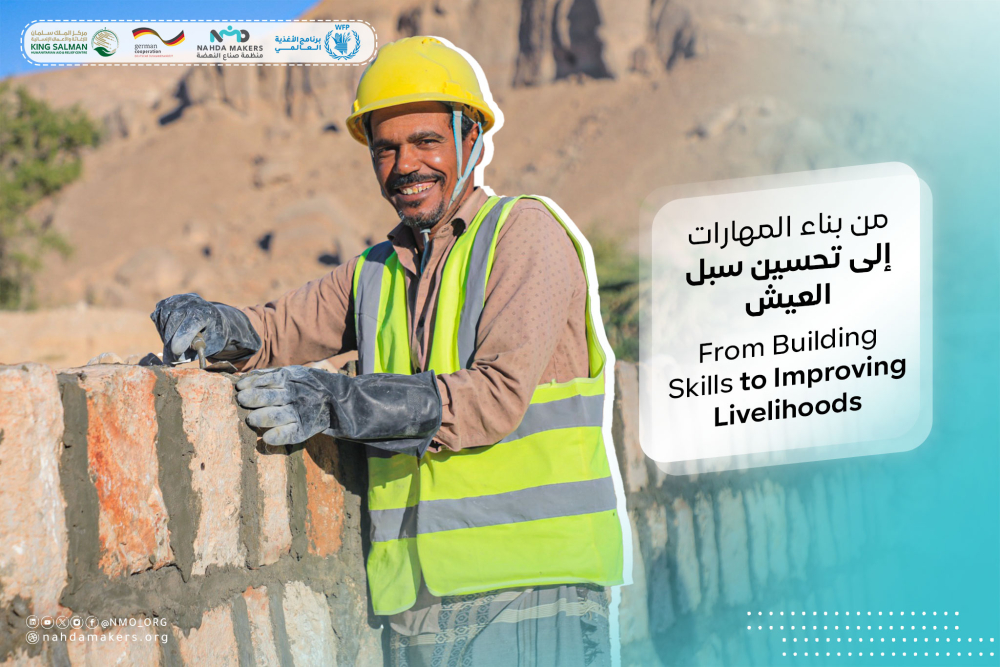
From Skill Building to Livelihood Improvement: How Did the FFA Project Turn “Fahmi Qouiqo’s” Aspirations into a Tangible Reality?
In Al Qatn District, 31-year-old Fahmi Qouiqo lives with and supports a family of four. Fahmi used to rely on irregular daily labor jobs with very limited wages that barely covered the minimum basic living expenses, placing him under continuous financial and psychological pressure as he struggled to provide for his children’s essential needs.
However, the turning point in his life began when he joined the Food Assistance for Assets (FFA) activity under the “Food to Future – #FuTuRe3” project, implemented by Nahda Makers Organization in partnership with the World Food Programme (#WFP) and supported by #BMZ & #KSRelief . Through his participation in the project’s field activities, Fahmi not only gained a temporary source of income, but also found a valuable opportunity to develop his practical skills, strengthen his professional capabilities, refine his expertise, and build a more stable future for himself and his family.
Fahmi says gratefully:
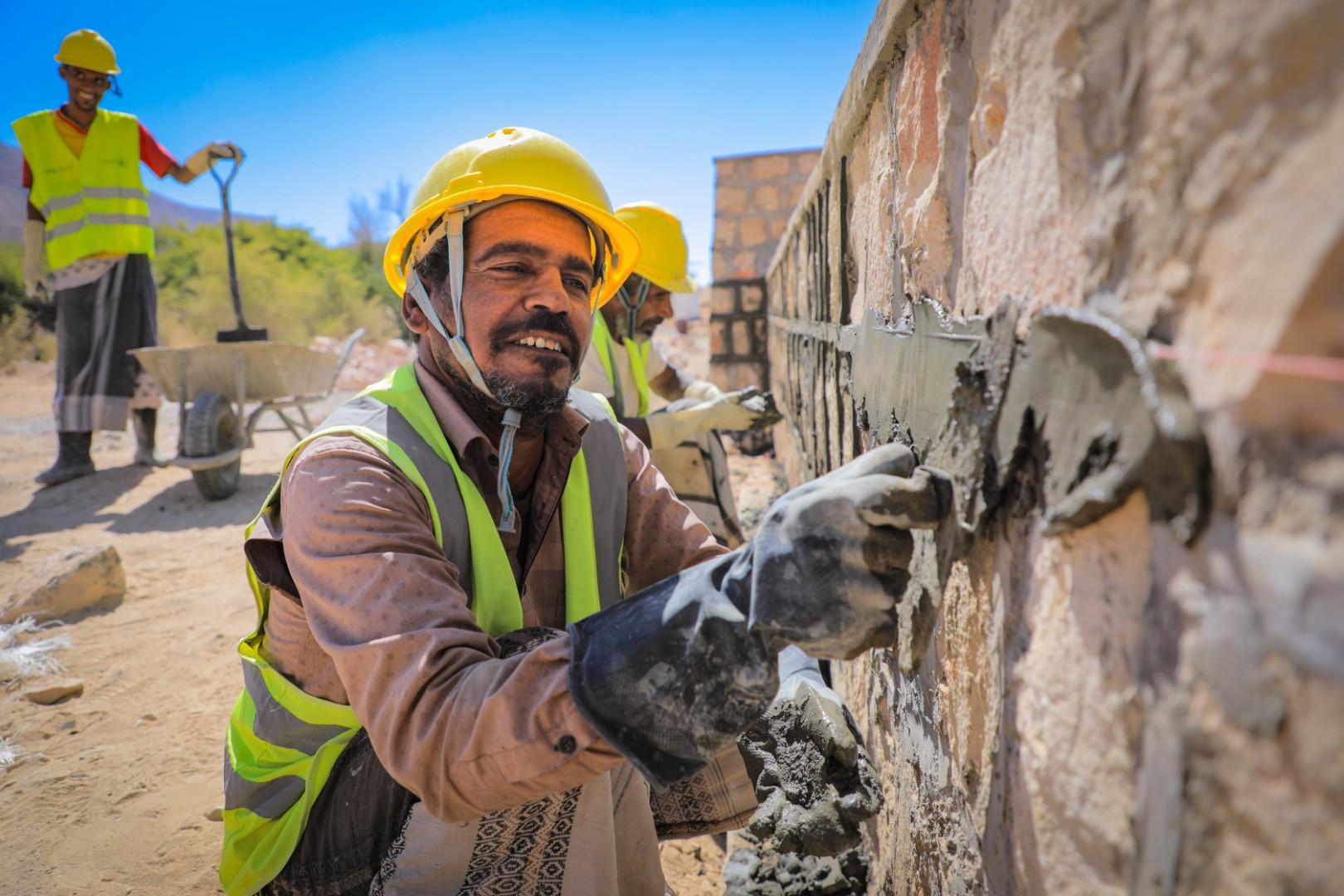
“Before joining the project, I struggled significantly to meet my family’s basic needs due to limited and unstable income. However, through this intervention, the impact was not limited to improving my living conditions; I also gained valuable practical experience in construction work, particularly in stone masonry and the construction of flood drainage channels. These skills have now become a real opportunity for me to work and improve my income in the future.”
The project has had a positive and multidimensional impact on Fahmi’s life. It contributed to his professional empowerment by equipping him with practical skills in constructing stone flood drainage channels, which enhanced his prospects for future employment in this field. In addition, the financial support he received through the project helped improve his family’s living conditions and enabled them to meet their basic needs with greater stability and dignity.
The impact of the project was not limited to the individual level; it also extended to the wider community. Fahmi and his colleagues contributed to works that help reduce flood risks and improve agricultural infrastructure in the area, thereby strengthening the community’s resilience to environmental and economic challenges.
Today, Fahmi looks forward to continuing his work in this field, emphasizing that the skills and experience he has gained represent a true capital for his professional future. In a message addressed to the supporting entities, he said:
“I would like to extend my sincere gratitude to Nahda Makers Organization and the donors for this opportunity. We hope such initiatives will continue and be expanded to other areas in urgent need of support, helping to create job opportunities for unemployed youth and enabling them to work, produce, and build a better future.”
Fahmi Qawiqo’s story reflects the positive impact of the #FuTuRe3 project in transforming short-term employment opportunities into a sustainable pathway for skills development and improved livelihood stability, thereby strengthening households’ ability to withstand and adapt to economic challenges and difficult conditions.
.jpg)